Data in action: Matching drugs that target glioblastoma tumour cell weakness for personalized oncology
Identifying and targeting weak spots in glioblastoma cancer cells
data in action: a deeper dive into AI, machine learning, and how data is used in research to impact patient welfare and clinical care
Data plays an important role in precision medicine; it helps clinicians find targeted therapies based on both patient individual characteristics and those of their disease. For example, in precision oncology this often involves characterizing cancer cells and comparing them with the patient’s own genetic information to identify cancer cell vulnerabilities such as predictive biomarkers for immunotherapy.
But how exactly do researchers use data in their work, especially where the sheer number of data points often overwhelms traditional manual processing? Hint: there’s more to it than typing into a computer keyboard. In this new series, we’re interviewing researchers who work with data for a deeper dive into tools such as AI and machine learning and tackling issues such as data clean up and security.
Identifying synthetic lethal vulnerabilities in glioblastoma cells that match with potential drug targets
Glioblastoma is an extremely aggressive brain cancer. Despite years of research, it is still difficult to treat and carries a very poor prognosis. The standard of care for this brain cancer currently is temozolomide but there has been no significant improvement over the last 20 years.
Survival is often measured in months.
Funded as a special initiative, this Marathon of Hope Cancer Centres Network project is putting data into action to discover weak spots in glioblastoma cells. Once these weak spots are identified they can be matched to potential drug targets that could kill or slow the growth of the tumour cells.
Dr. Yuka Takemon, part of the cross-Canada multidisciplinary team of scientists, bioinformaticians, neurosurgeons, pathologists, and medical oncologists working on this project, describes how data plays a vital role in this research.
What is the key research question you are trying to answer, and what impact do you hope to have for cancer patients?
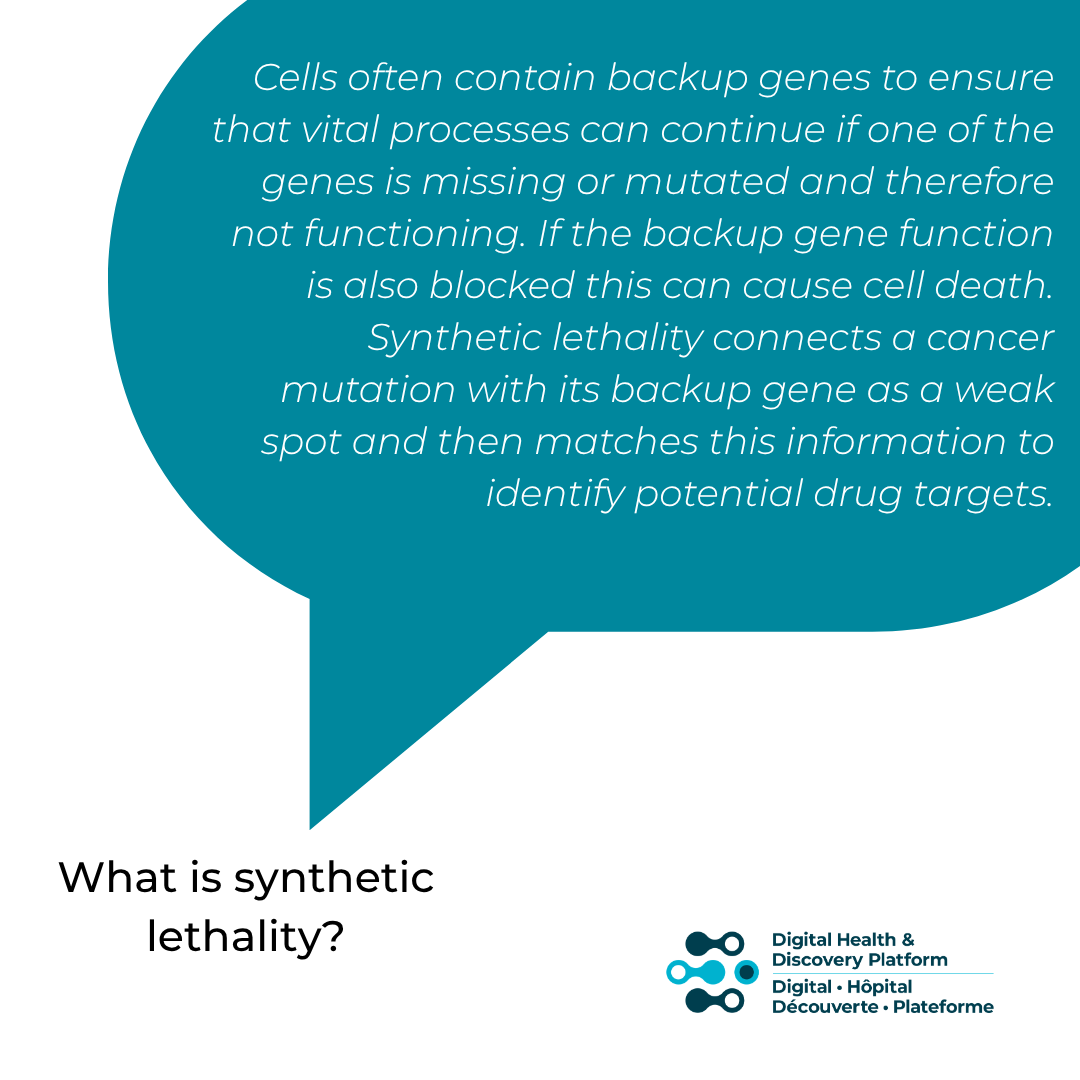
Most genetic changes we find in a patient’s cancer cannot be directly targeted with drugs. This is especially true for glioblastoma. Our research asks, can we turn these “undruggable” genetic changes into a guide for discovering weak spots in the cancer cell that are druggable?
We use a concept called synthetic lethality to search for partner genes that cancer cells rely on when they carry these hard-to-target changes.
Our goal is to develop a personalized approach to matching each glioblastoma patient with alternative and potentially more effective treatment options.
Where does data fit into the research?
Data is central to everything we do.
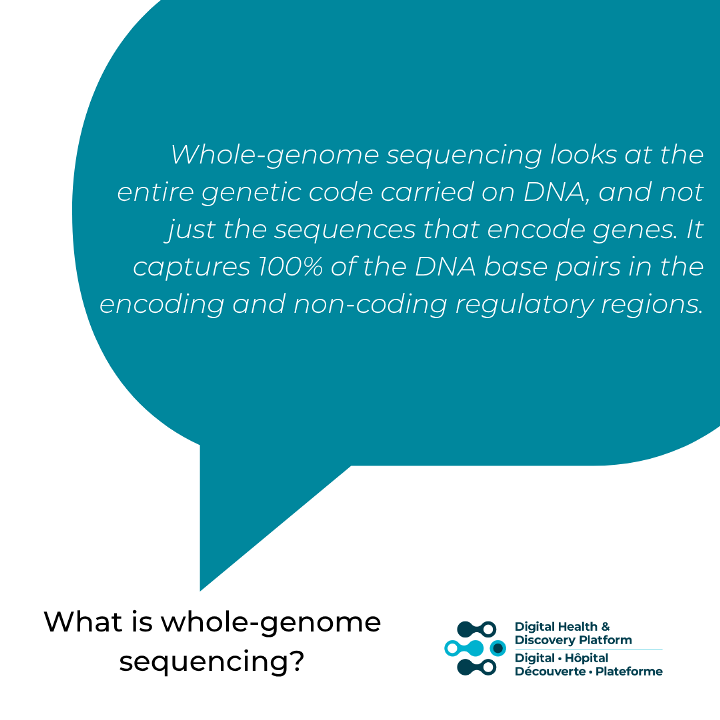
We use whole‑genome sequencing from the MOHCCN Gold Cohort to compare each patient’s tumour with their normal cells and identify genetic changes specific to the individual's cancer. We use these data to compare and cross check against large public resources to see whether they can be targeted with existing or emerging drugs.
In short, we’re translating complex genetic information into personalized, testable drug targets for patients with glioblastoma.
How do you work with the data?
Each institution generates and processes genomic data in slightly different ways; this makes analyzing combined data sets challenging.
Before we start any analysis, we run quality checks so the data from each site is as reliable as possible. Because different centres use formats and tools, we cannot fully standardize our methods, so we treat the data from each province as its own cohort and clean them using independent methods.
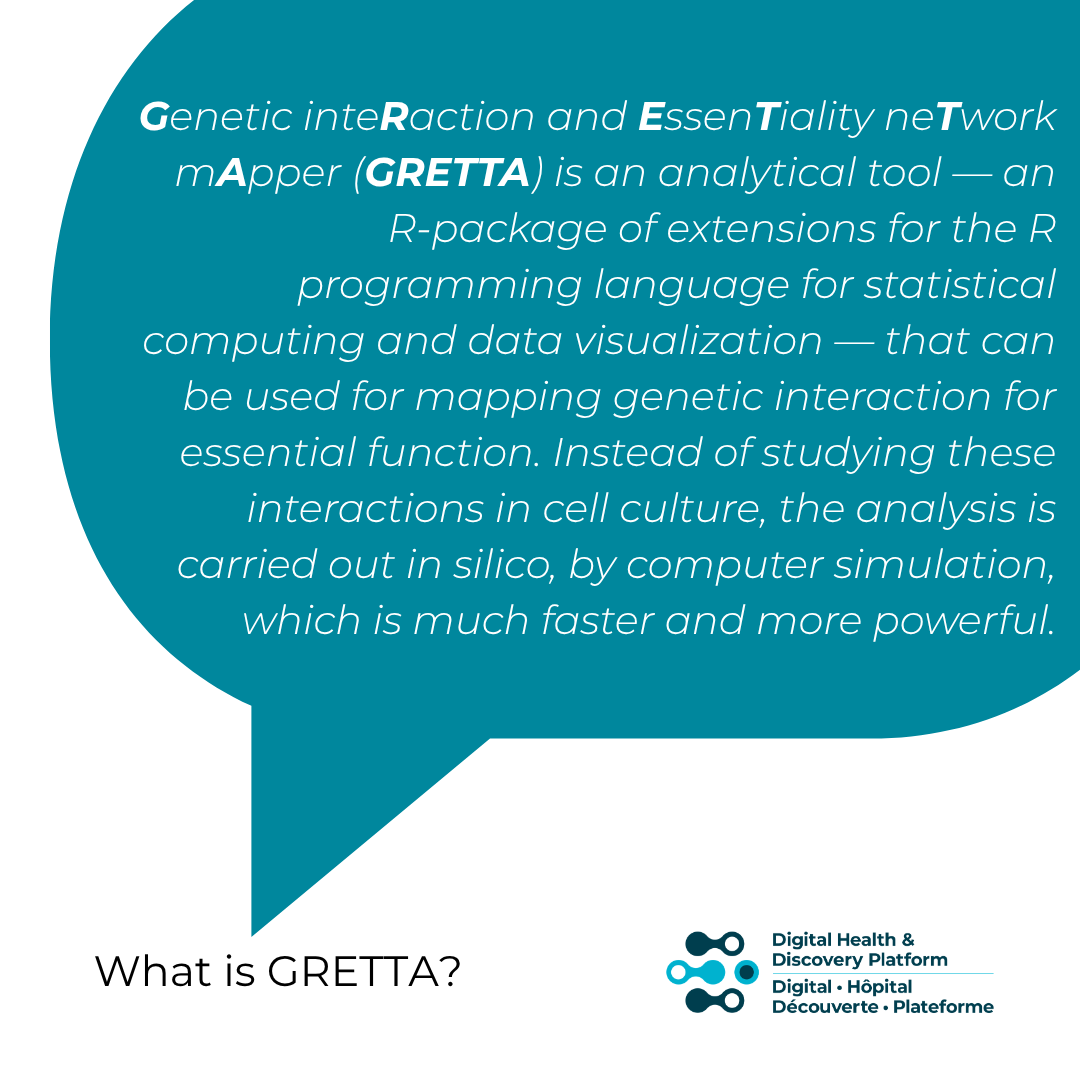
Once we make sure we have tumour and matched normal genomic data for each patient and that the data meets our quality standards, we identify tumour-specific mutations. This information is compared with online resource, DepMap for genomic and cell viability data, then input into GRETTA, a tool we developed to predict synthetic lethal partner genes that are potential vulnerabilities of cancer cells.
We then match these partner genes against the Open Targets Platform to identify those that can be drugged using existing and emerging drugs.
How do you keep patient data secure and private?
Protecting the privacy of patients’ genomic data is absolutely essential in our work. We use anonymized glioblastoma genomic data from the MOHCCN gold cohort collected across several provinces, which is shared with us in BC through a secure file‑sharing platform. In BC, the data are stored at Canada’s Michael Smith Genome Sciences Centre in a backup, password‑protected facility that is ISO 27001‑certified for information security. Access is restricted to approved researchers on our project, so individual patients cannot be identified from the data.
Have AI and machine learning made an impact on the data analysis?
AI and machine learning have made it much easier to spot complex patterns in large cancer datasets, and in some settings, they can outperform traditional statistical methods. In areas where we already know the “ground truth,” these tools can help us automate and scale analyses that used to be very manual.
But in questions like discovering new synthetic lethal partner genes, where the true relationships are still unknown, AI is not always the best first choice because it can reveal patterns that are hard to interpret or may not be biologically meaningful. It is important to carefully evaluate AI‑based and traditional approaches to choose the method that best fits the scientific question, rather than using AI by default.
My colleague, Dr Dan Jin and I have explored whether AI/machine learning techniques could be used to identify drug targets; this work is still in its infancy, and we hope to explore this further.
Read more about this project: Computational synthetic lethal analysis of MOHCCN genomic data to expand precision cancer genomic medicine options for glioblastoma multiforme patients